Loading page…
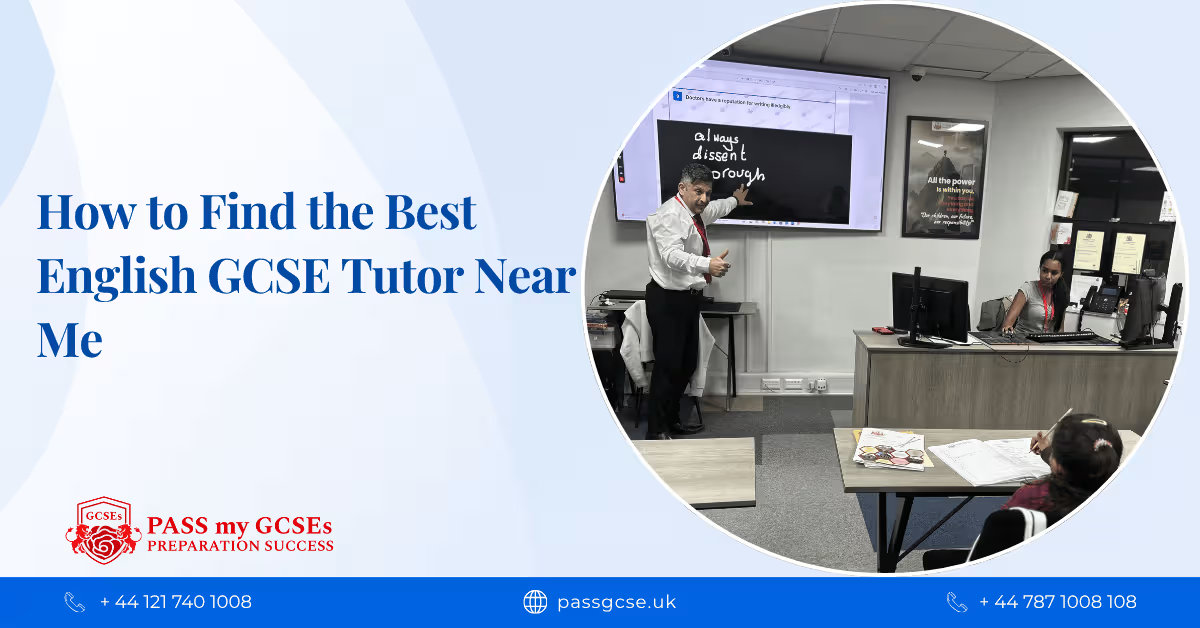
How to Find the Best English GCSE Tutor Near Me: A Complete Guide
Published on
Typing "English GCSE tutor near me" into a search bar feels easy enough. Actually finding the right one, someone who can make Shakespeare feel less intimidating, explain exactly what examiners want in an essay, and gently build a student's confidence with writing, takes a bit more thought. English is a subject where the right guidance genuinely changes how a student reads and writes, not just what grade they get.
The good news is that finding a great English tutor does not need to be complicated once you know what to look for. In this guide, we will walk through exactly what makes a strong English GCSE tutor, the questions worth asking, and why searching "near me" does not need to limit your options anymore.
Key Takeaways
A great English tutor should know your child's exact exam board, set texts and poetry anthology.
English covers two GCSEs, Language and Literature, and a good tutor should support both.
Online tutoring often opens up access to more experienced, specialised tutors than searching locally alone.
Strong feedback on writing technique matters just as much as content knowledge.
The best tuition pairs a good tutor with structured revision, past papers and mock exams.
Why English Often Needs a Different Kind of Support
Unlike subjects with clear right or wrong answers, English is built around interpretation, argument and expression. This means two students can write technically correct answers, yet score very differently, simply because one understands exactly what examiners are looking for and the other does not.
English GCSE is also unusual in that it covers two separate qualifications, English Language and English Literature. Language focuses on reading unseen texts and writing skills, while Literature focuses on set texts, poetry and detailed analysis. A good tutor should be comfortable supporting both, since the skills, while related, are genuinely different.
What Should You Actually Look For in an English GCSE Tutor?
Real Familiarity With Your Exam Board and Set Texts
English Literature in particular depends heavily on set texts and a specific poetry anthology, and these vary between exam boards like AQA, Edexcel, OCR and Eduqas. A tutor who already knows your child's exact texts can dive straight into meaningful analysis, rather than learning the material alongside the student.
Strong Essay and Writing Technique
A large part of English GCSE success comes down to structuring a clear, well argued essay under time pressure. A good tutor should be able to break this down into a simple, repeatable method, covering how to plan quickly, structure paragraphs, and use evidence effectively.
A Genuine Love of Reading and Language
Enthusiasm is surprisingly contagious. Tutors who clearly enjoy English tend to help students see beyond simply "getting through" a text, sparking genuine curiosity about themes, characters and language choices, which often translates into stronger, more thoughtful answers.
Clear, Honest Feedback on Writing
Improving in English relies heavily on detailed, specific feedback, not just a grade or a tick. The best tutors explain exactly why a paragraph works or does not, so students can apply that lesson to their next piece of writing, not just the one just marked.
Patience With Both Confident and Reluctant Writers
Some students freeze up at a blank page, while others write fluently but ramble without structure. A strong tutor adapts their approach to whichever type of writer sits in front of them, rather than using one fixed teaching style for everyone.
Do You Really Need to Search "Near Me"?
Not anymore. A few years ago, finding an English tutor almost always meant searching locally, since lessons happened face to face. Today, that no longer has to be the only option.
In Person Tutoring
Limited to tutors who live nearby
Involves travel time for both sides
Fewer choices if a strong Literature specialist is hard to find locally
Online Tutoring
Access to experienced tutors, regardless of location
No travel time, lessons fit around the family's schedule
Shared documents make it easy to mark up essays together in real time
Online tutoring has genuinely changed what "finding the best English tutor near me" actually means. Rather than being limited to whoever happens to live close by, families can now choose a tutor based on real subject expertise and teaching style, with lessons delivered comfortably from home.
Questions Worth Asking Before You Choose a Tutor
Do you have experience with my child's exact exam board and set texts?
How do you help students structure essays under timed conditions?
Do you cover both English Language and English Literature?
How do you give feedback on written work, and how often?
Do you use past papers and mock exams as part of your teaching?
Asking these questions upfront, ideally during a trial lesson, helps avoid wasted time and money, and gives a much clearer sense of whether a tutor's style genuinely suits your child.
Warning Signs Worth Watching Out For
Be cautious of tutors who cannot clearly explain their experience with your exact set texts or exam board, who offer only vague or generic feedback on writing, or who focus purely on content without ever addressing exam technique. A good English tutor should be able to explain their teaching approach clearly, not just point to results.
What Great English Tuition Looks Like in Practice
The best English tuition rarely relies on one to one lessons alone. It works best as part of a wider, well rounded plan that includes structured revision, real practice and honest feedback.
Personal, One to One Guidance
Every student has different strengths and gaps. Our English GCSE tutors work closely with each student, whether that means building confidence with unseen texts, deepening analysis of set texts, or simply learning how to plan a strong essay quickly under pressure.
A Clear, Structured Revision Plan
Rather than covering topics in a random order, following a guided structure keeps revision focused and manageable. Our GCSE revision courses walk students through English step by step, covering both Language and Literature at a steady, sensible pace.
Practice With Genuine Exam Style Questions
Understanding a text and being able to answer real exam questions on it confidently are two different skills. We always recommend working through authentic past papers, since nothing builds real exam readiness quite like practising with genuine questions and mark schemes.
Confidence Building Through Realistic Mock Exams
Timed writing can catch even a strong student off guard if they are not used to it. Our English mock exams recreate the real exam experience closely, helping students walk into their actual English exam feeling calm and genuinely prepared.
Conclusion
Finding the best English GCSE tutor is not really about location anymore, it is about finding genuine subject expertise, strong essay technique, and a teaching style that suits your child. With online tutoring, that search can go far beyond your local area, opening the door to experienced tutors who truly know how to help. Paired with structured revision, real practice and realistic mock exams, the right tutor can turn English from a source of stress into one of your child's strongest subjects.
Frequently Asked Questions
Do I need to find an English tutor who lives near me?
Not necessarily. Online tutoring means you can access experienced tutors regardless of location, often giving you far more choice than searching locally alone.
Does an English tutor need to know my child's exact set texts?
Ideally, yes. Set texts and poetry anthologies vary between exam boards, so a tutor familiar with your child's exact texts can offer much more focused and useful analysis.
Should tutoring cover both English Language and English Literature?
Yes, since both are separate GCSEs with different skills involved. A good tutor should be comfortable supporting a student across both qualifications.
How often should my child have English tutoring sessions?
This depends on the individual student, but one to two focused sessions a week is usually enough when combined with regular reading and writing practice at home.
Should English tutoring include mock exams and past papers?
Yes, ideally. Understanding texts is only part of the picture, practising with real exam questions and timed mock exams helps build genuine exam confidence and technique.

Mr Singh
Founder, Pass My GCSE
Mr Singh is the founder of Pass My GCSE, with over 30 years of teaching experience. Having overcome academic setbacks himself, he is passionate about ensuring no child struggles alone. His approach focuses on personalised support, strong foundations, and building confidence. He has helped students achieve outstanding results in 11+ and GCSE examinations
Loading related posts…
Ready to Transform Your Child's GCSE Results?
Join hundreds of Birmingham families who trust Pass My GCSE to deliver real, measurable results.