Loading page…
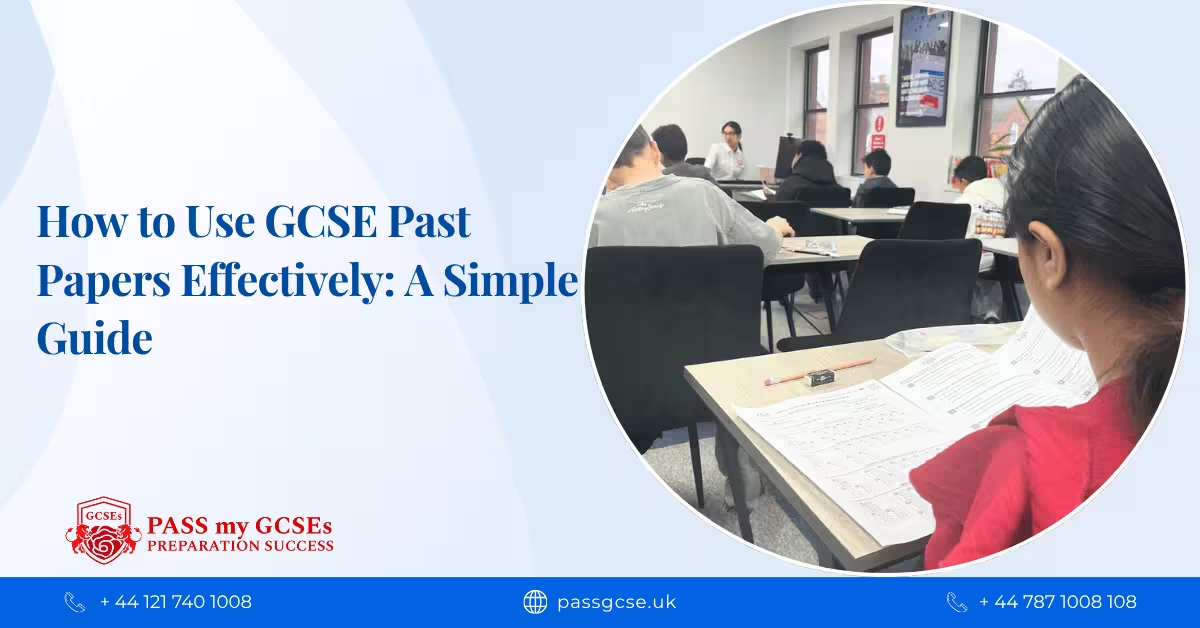
How to Use GCSE Past Papers Effectively: A Simple Guide
Published on
Ask any teacher what the single most useful revision tool is, and past papers almost always come up. Yet a lot of students still use them the wrong way, either leaving them until the last minute, or simply reading through the questions without actually testing themselves properly.
Past papers are so much more than a way to check what topics might come up. Used properly, they help build real confidence, spot weak areas early, and get students used to the exact pressure of exam day. In this guide, we will walk through exactly how to use them well, at every stage of Year 10 and Year 11.
Key Takeaways
Past papers turn passive revision, like reading notes, into active revision, where knowledge is actually tested.
How you use past papers should change depending on where you are in Year 10 or Year 11.
The blurting method is a simple, powerful way to test memory without notes.
Learning to read a mark scheme properly is just as important as answering the questions.
Practising under real timed conditions builds genuine exam confidence, not just knowledge.
Why Past Papers Are Such a Powerful Revision Tool
GCSE past papers are simply real exam papers from previous years, often paired with the official mark scheme used to grade them. Working through these papers properly can help a student:
Get familiar with the style and structure of real exam questions
Practise working within the actual time limits they will face
Spot common question types and understand what earns top marks
Identify weak topics early, so revision time is spent where it matters most
Notice how different exam boards structure their papers and questions
There is an important difference between passive revision, like rereading notes or highlighting a textbook, and active revision, where a student is actually applying what they have learned. Past papers are one of the most effective ways to shift into that active style of learning, and it is exactly why they matter so much.
When Should You Start Using Past Papers?
The right time to start using past papers depends on where a student is in their GCSE journey. It is worth remembering that past papers work best once a topic has already been taught and learned properly. The goal is to check understanding and apply knowledge, not to catch students out before they are ready.
Early Year 10
At this stage, past papers are best used topic by topic, working through a handful of questions on whatever has just been covered in class. This keeps things low pressure and helps build familiarity gradually.
Later Year 10 and Early Year 11
As more content is covered, it becomes useful to attempt full sections or half papers, mixing topics together the way a real exam would. This is also a good stage to start introducing loose time limits.
Closer to the Real Exams
In the final stretch before GCSEs, full past papers should be completed under strict, timed exam conditions, exactly matching what will happen on the actual exam day. By this point, the focus shifts from simply learning content to fine tuning technique and timing.
Three Techniques to Get the Most Out of Past Paper Practice
1. Use the Blurting Method to Test Recall
The blurting method is a simple but powerful revision technique. Instead of reading notes or passively highlighting a textbook, it forces the brain to actually retrieve information from memory, which is proven to build stronger, longer lasting understanding.
Choose a question from a past paper
Without looking at any notes, write down everything remembered about the topic, this is the blurting stage
Compare that answer against notes or the official mark scheme, marking any gaps or mistakes in a different colour
Use those gaps as a clear starting point for the next round of revision
This method works especially well for short answer or topic specific questions, and is a great habit to build early in the revision process.
2. Learn to Read Mark Schemes Properly
Official mark schemes are one of the most underused revision tools out there. They show exactly what examiners are looking for, and understanding them can genuinely change how a student writes answers. When reading a mark scheme, it helps to look closely at a few things.
Command words, such as describe, explain or evaluate, which show exactly what type of answer is expected
Key terminology, the specific subject vocabulary that often needs to appear for full marks
How marks are broken down, especially for longer or multi part questions
Example answers, which show what a strong, top mark response actually looks like
Common mistakes, which help highlight what to avoid
Mark schemes work best when used honestly, to reflect on what went well and what could be improved next time. The goal is not perfection on the first attempt, it is steady, meaningful progress.
3. Practise Under Real, Timed Exam Conditions
One of the most effective habits a student can build is completing full past papers under realistic, timed conditions, not just working through questions casually. This helps with far more than just content, it builds:
Time management, learning how to pace answers properly
Focus and stamina, staying engaged through an entire paper
Genuine exam technique, understanding how to approach different question types
Confidence under pressure, since the whole experience starts to feel familiar
To recreate proper exam conditions at home, it helps to find a quiet space, set a timer for the full length of the paper, use only the materials allowed in the real exam, complete the whole paper in one sitting, and then mark it honestly using the official mark scheme.
Where Can You Find Genuine GCSE Past Papers?
Official past papers and mark schemes are published directly by each exam board on their own websites, and are completely free to access. Since papers, formats and question styles genuinely differ between boards, it is important to always use the correct board's materials rather than a generic set of practice questions.
To make this simpler, our GCSE past papers collection is organised clearly by exam board and subject, so students and parents can find exactly the right materials without having to search around multiple websites.
How Parents Can Support Past Paper Revision
Helping a teenager revise using past papers does not require deep subject knowledge. It is really about creating the right environment and structure around them.
Create structure, helping build a simple revision timetable that includes regular past paper practice
Support timed sessions, acting as a timekeeper to help recreate real exam conditions
Talk through progress, encouraging honest reflection on what went well and what needs more work
Protect balance, making sure there is still time for rest, movement and breaks to keep motivation steady
Turning Past Paper Practice Into a Full Revision Plan
Past papers work best as part of a wider, well organised approach to revision, rather than something used randomly here and there.
Follow a Clear, Structured Plan
Rather than jumping between subjects without direction, a guided structure helps students know exactly what to revise and when. Our GCSE revision courses are built to walk students through each topic step by step, so past paper practice always builds on solid understanding.
Sit Full Mock Exams to Bring It All Together
While individual past papers are brilliant for topic practice, sitting a full mock exam brings everything together under genuine, realistic pressure. Our GCSE mock exams recreate the real exam experience closely, giving students the chance to practise timing, technique and stamina all at once.
Get Personal Feedback on Every Answer
Marking your own work against a scheme is useful, but a second, expert set of eyes can catch things a student might miss. Our GCSE tutors review past paper answers closely with each student, turning every practice paper into a clear, focused improvement plan.
GCSE TUITION
Ready to Help Your Child Succeed in Their GCSEs?
Join hundreds of families who trust Pass GCSE for expert tuition, proven results, and a clear path to exam success.
Conclusion
Past paper practice is so much more than a way to revise, it is a genuine confidence builder. Used properly, it gives students a clear understanding of exactly what to expect on exam day, and a real sense of how to improve with every attempt. Whether preparing for a school mock exam or the final summer GCSEs, regular, thoughtful use of past papers can make all the difference.
Frequently Asked Questions
When should students start using GCSE past papers?
Past papers can be introduced gradually from early Year 10, starting with individual topics, then moving to full timed papers as exams get closer.
What is the blurting method?
It is a revision technique where a student writes down everything they remember about a topic without using notes, then checks it against the mark scheme to spot gaps.
Why is it important to read the mark scheme, not just the answers?
Mark schemes show exactly what examiners are looking for, including command words, key terminology and how marks are awarded, which helps students understand how to structure stronger answers.
How can parents help with past paper revision if they do not know the subject?
Parents can still help enormously by creating a revision timetable, timing practice sessions, discussing progress afterwards, and making sure there is a healthy balance of rest and breaks.
Where can students find genuine past papers for their exam board?
Official past papers and mark schemes are available directly from each exam board's website, and are also organised clearly by board and subject in our own past papers collection.

Mr Singh
Founder, Pass My GCSE
Mr Singh is the founder of Pass My GCSE, with over 30 years of teaching experience. Having overcome academic setbacks himself, he is passionate about ensuring no child struggles alone. His approach focuses on personalised support, strong foundations, and building confidence. He has helped students achieve outstanding results in 11+ and GCSE examinations
Loading related posts…
Ready to Transform Your Child's GCSE Results?
Join hundreds of Birmingham families who trust Pass My GCSE to deliver real, measurable results.