Loading page…
How to Find Your GCSE Exam Board (Simple Step by Step Guide)
Published on
Here is a question that trips up a lot of GCSE students. You sit down to revise, open a random revision guide or a video online, and halfway through you think, "wait, is this even the right board for my exam?" It happens more often than you would think, and it can waste hours of study time.
Knowing your exam board is one of those small details that makes a big difference. In this guide, we will explain what an exam board actually is, why it matters so much for revision, and the easiest ways to find out exactly which one you are studying with.
Key Takeaways
The main GCSE exam boards are AQA, Edexcel, OCR and WJEC Eduqas.
Each board asks questions a little differently, so using the wrong revision material can slow you down.
The easiest ways to check your board are your teacher, your school portal, past papers, your exams officer, or your Statement of Entry.
Private and home educated candidates should check directly with the exam centre they registered through.
Once you know your board, you can revise using the exact right style of questions and past papers.
What Is a GCSE Exam Board, and Why Does It Matter?
Think of an exam board as the organisation that writes and marks your GCSE exam papers. In the UK, the main boards are AQA, Edexcel (also called Pearson), OCR, and WJEC Eduqas. Even though two students might both be doing GCSE Biology, if one is with AQA and the other is with OCR, their actual exam papers can look quite different.
The subject content is broadly similar across boards, but the way it is tested is not. One board might ask more practical, hands on questions, while another leans more towards calculations or multiple choice. Timings, paper structure and even command words used in questions can vary too.
This is exactly why knowing your board matters so much. Revision guides, textbooks and practice papers are usually written for one specific board. If your child revises using the wrong board's materials, they might spend hours learning content that is either missing from their exam, or is tested in a completely different style than they expect.
What Knowing Your Exam Board Helps With
Saves time by focusing only on what is actually in your syllabus
Helps you practise with the exact style of questions you will face
Improves exam technique to match how that board marks answers
Reduces stress, since there are no surprises on exam day
Five Simple Ways to Find Out Your Exam Board
The good news is that finding your exam board is usually quick and easy. Here are five simple ways to check.
1. Simply Ask Your Teacher
This is the fastest and most reliable way. Your subject teacher will always know which board your class is following, and can often tell you the exact specification code too. A simple question like "which exam board are we doing for this subject" is all it takes. If you are not in class, a quick email works just as well.
2. Check Your School's Online Learning Platform
Most schools now use online platforms such as Google Classroom, Microsoft Teams, or similar systems to share class materials. Look through your files for names like "AQA Biology Paper 1" or "Edexcel Maths Revision Notes." The board name is usually right there in the file title or at the top of the document.
3. Look at Old Past Papers or Revision Booklets
If your school has already given you past papers, mock exams, or printed revision booklets, check the front cover. The exam board name is almost always printed clearly at the top of the page. If you spot a code instead of a full name, a quick search of that code online will usually take you straight to the board's official website.
4. Ask Your School's Exams Officer
Every school has a staff member responsible for managing exam entries, usually called the exams officer. They will know exactly which board each student is registered with for every subject. If you are not sure who this is, your form tutor or the school reception can point you in the right direction.
5. Check Your Statement of Entry
As exams get closer, your school will give you an official document called a Statement of Entry. This lists every subject you are entered for, along with the board name or code and the exact paper numbers and dates. This is one of the most accurate ways to confirm your board, so it is worth keeping this document safe.
What If You Are a Private or Home Educated Candidate?
If you are studying independently rather than through a school, the process is a little different but still simple. You will need to contact the exam centre where you registered and ask which board and specification you have been entered under. It also helps to note down the specification code, since this makes it much easier to find the correct revision resources later on.
Once You Know Your Board, What Comes Next?
Finding out your exam board is really just the first step. The real value comes from using that information properly, by revising with the right materials and practising in the correct exam style from the very start.
Revise With a Clear, Structured Plan
Once your board is confirmed, it becomes much easier to follow a focused study plan instead of jumping between random resources. Our GCSE revision courses are built around real exam board specifications, so every topic covered is actually relevant to what your child will be tested on.
Practise With the Right Style of Questions
Different boards phrase questions differently, and getting used to that style matters more than most students realise. This is why we always recommend working through genuine past papers that match your exact board, so your child becomes familiar with the real wording and format they will see on the day.
Test Yourself Under Real Exam Conditions
Knowing the content is only half the job. Sitting a full paper under timed, realistic conditions is what really builds confidence. Our GCSE mock exams are designed to match the actual structure and timing of each major exam board, so students walk into their real exam feeling calm and prepared rather than caught off guard.
Get One to One Help Where It Is Needed
Sometimes a student is confident in most of a subject but keeps losing marks in one specific area. This is where personal guidance makes a real difference. Our GCSE tutors work closely with each student, matching their teaching to the exact exam board so every lesson feels directly useful, not generic.
GCSE TUITION
Ready to Help Your Child Succeed in Their GCSEs?
Join hundreds of families who trust Pass GCSE for expert tuition, proven results, and a clear path to exam success.
Finding Your Exam Board Does Not Need to Feel Stressful
Once you know where to look, checking your exam board only takes a few minutes. Whether it is a quick question to your teacher, a look through your Statement of Entry, or a glance at an old past paper, this small step can save a huge amount of confusion later on. From here, your child can revise with total confidence, knowing every past paper, every practice question, and every topic covered is exactly right for their real exam.
Frequently Asked Questions
What are the main GCSE exam boards in the UK?
The most common boards are AQA, Edexcel, OCR and WJEC Eduqas. Each one sets its own exam papers and marking style, even for the same subject.
Why does my GCSE exam board matter for revision?
Revision guides and past papers are usually written for a specific board. Using the wrong ones can mean studying content that is not actually on your exam, or missing the exact question style you will face.
How can I quickly find out my exam board?
The fastest way is simply to ask your subject teacher. You can also check your school's online platform, old past papers, your exams officer, or your official Statement of Entry.
What is a Statement of Entry?
It is an official document your school gives you before exams, listing every subject you are entered for, along with the exam board and paper details for each one.
What should private candidates do to find their exam board?
Private or home educated candidates should contact the exam centre they registered with directly and ask for their exam board and specification code for each subject.
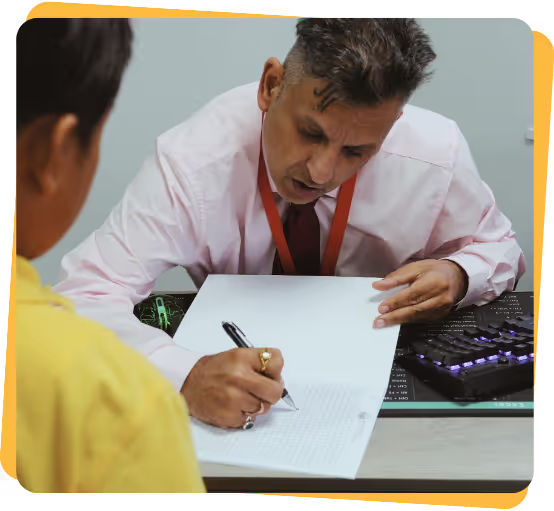
Mr Singh
Founder, Pass My GCSE
Mr Singh is the founder of Pass My GCSE, with over 30 years of teaching experience. Having overcome academic setbacks himself, he is passionate about ensuring no child struggles alone. His approach focuses on personalised support, strong foundations, and building confidence. He has helped students achieve outstanding results in 11+ and GCSE examinations
Loading related posts…
Ready to Transform Your Child's GCSE Results?
Join hundreds of Birmingham families who trust Pass My GCSE to deliver real, measurable results.