Loading page…
When Is GCSE Results Day 2026? Date, Time & Guide
Published on
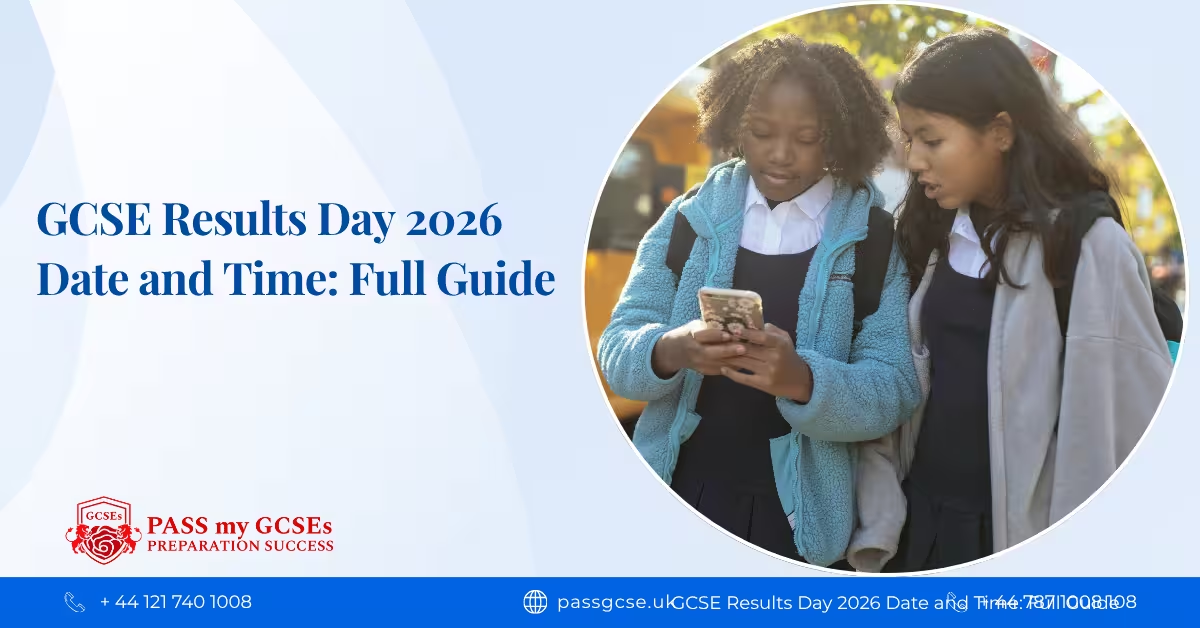
Results day brings a strange mix of nerves and excitement, and that is completely normal, whether you are the one collecting your results or a parent waiting alongside them. Months of revision, mock exams and hard work all come down to one single morning, and not knowing exactly what to expect can make the wait feel even longer.
This guide covers everything you need to feel properly prepared, exactly when GCSE results day 2026 falls, what time results actually come out, every way you might receive them, and what to do once they are finally in hand.
Key Takeaways
GCSE results day 2026 falls on Thursday 20 August, the same date across England, Wales and Northern Ireland.
Most schools release results from around 8am, though the exact time varies by school.
Results can usually be collected in person, through a school portal, by email, or by post.
What you receive on the day is a results slip, not the official certificate, which follows later.
If results are not what was hoped for, there are still clear next steps, including resits and appeals.
When Is GCSE Results Day 2026?
Thursday 20 August 2026. The same date across England, Wales and Northern Ireland
Even though each nation uses its own exam boards, results day itself falls on the same date everywhere. Schools and exam centres actually receive the results a day earlier, on Wednesday 19 August, simply to give staff time to get everything ready. There is no way to access results before Thursday, so there is genuinely no need to spend that Wednesday refreshing an inbox. The wait can feel long, but it is exactly the same for everyone, and it will be over soon enough.
What Time Do GCSE Results Actually Come Out?
Most schools begin releasing results from around 8am, though the exact time can vary from school to school. Some open their doors a little later, and others ask students to arrive at a set time slot to help keep things calm and avoid overcrowding.
There is no single national time or app that releases GCSE results everywhere at once, so the most reliable way to find the exact plan is to check the letter or email your school sent about results day. If that has gone missing, a quick call to the school will usually clear things up well before the day itself.
How Can You Get Your GCSE Results?
Schools tend to offer a few different ways to receive results, and it is worth knowing all the options in case one suits you better than another.
Method | What to Know |
In person at school | The most common route. Staff are on hand to talk through results and answer questions straightaway. |
Online school portal | Some schools upload results to a parent or student portal, so they can be checked from home. |
By email | A few schools send results directly by email, especially if this has been arranged in advance. |
By post | For anyone who cannot collect in person, some schools will post results, though this naturally takes a little longer. |
Whichever method is used, what arrives on the day is a results slip, not the official certificate. Certificates are printed separately and usually reach schools in October or November, and your school will explain exactly how to collect them once they are ready.
What If You Are Not Collecting Your Results in Person?
Not being there on the day in person is completely fine, and there are good options to fall back on.
If the school offers online or email access, ask in advance how to get this set up
If someone else, such as a family member, is collecting results on your behalf, most schools ask for written permission first, so it is worth checking what is needed ahead of time
If you are applying to a sixth form or college and need to confirm a place quickly, it is usually fine to call and read your grades out over the phone once you have them, admissions teams are well used to this and have staff available throughout the day to help
What Happens After You Have Got Your Results?
Once results are in hand, a few small steps now can save some stress later.
Take a clear photo of the results slip and save it somewhere safe, such as an email or a cloud drive, alongside the original
Keep this digital copy handy, since grades often need confirming more than once over the following couple of years
Remember that grade boundaries change every year, depending on how the exam and the wider group of students performed nationally
If a grade feels close to the boundary above, your school will be able to explain exactly how marks were converted into that final grade for your specific exam board and subject.
What Do Your Results Actually Mean?
GCSEs in England are graded on a scale from 9 to 1, with 9 being the highest. Grade 4 is known as a standard pass, and grade 5 is a strong pass. Anything below a 3 is generally considered a fail, though the exact boundary can shift slightly each year.
It helps to know roughly how the new number grades line up with the old A star to G system. A grade 9 broadly sits above an old A star, a grade 7 is roughly equal to an old A, and a grade 4 sits around an old C. The two systems do not map onto each other perfectly, but this gives a general sense of where a result stands.
If Results Are Not What You Hoped For
If results do not turn out the way you hoped, there is genuinely no need to panic. There are always clear next steps available, including asking your school about a grade review or appeal if a result seems surprising, looking into resit options for subjects like English and Maths, or speaking with your school or college about alternative routes forward. Whatever happens on the day, it is a starting point, not a final verdict, and support is there whichever path comes next.
Getting Ready for Next Year's Results, Starting Now
Whether this year's results bring celebration or a resit ahead, one thing holds true either way, steady, well structured preparation makes results day feel far less daunting the next time around.
A Personalised Plan, Built Around the Result You Want
Our GCSE tutors work closely with each student, whether that means strengthening a subject for a resit, or building on strong results to aim even higher next time.
Structured Revision That Builds Real Confidence
Our GCSE revision courses guide students through each subject step by step, so next year's results day feels a lot less like a guessing game.
Genuine Exam Practice All Year Round
We always recommend working through real past papers, since nothing builds true readiness quite like practising with authentic exam questions well before the big day.
Mock Exams That Take the Surprise Out of Exam Day
Our GCSE mock exams recreate real exam conditions closely, so when the actual results day arrives, nothing about the exam itself should feel unfamiliar.
GCSE TUITION
Ready to Help Your Child Succeed in Their GCSEs?
Join hundreds of families who trust Pass GCSE for expert tuition, proven results, and a clear path to exam success.
Conclusion
Results day only feels daunting because of the unknowns, the date, the time, and exactly how the results will reach you. Take those away, and what is left is simply a day, one that ends with an answer that has been months in the making. However the results turn out, they are a starting point, not a final verdict. There is always a next step, whether that is celebrating, resitting, or working out what comes next, and support is there whichever one it turns out to be.
Frequently Asked Questions
What date is GCSE results day 2026?
GCSE results day 2026 falls on Thursday 20 August, the same date across England, Wales and Northern Ireland.
What time do GCSE results come out?
Most schools release results from around 8am, though the exact time varies, so it is best to check the letter or email sent by your school.
Can I get my GCSE results without going into school?
Yes, many schools offer results through an online portal, by email, or by post, so collecting in person is not always necessary.
Is the results slip the same as my official certificate?
No, what you receive on results day is a results slip. Official certificates are printed separately and usually reach schools in October or November.
What should I do if my grades are not what I expected?
There is no need to panic. Options include asking about a grade review or appeal, looking into resits, or speaking with your school or college about alternative next steps.

Mr Singh
Founder, Pass My GCSE
Mr Singh is the founder of Pass My GCSE, with over 30 years of teaching experience. Having overcome academic setbacks himself, he is passionate about ensuring no child struggles alone. His approach focuses on personalised support, strong foundations, and building confidence. He has helped students achieve outstanding results in 11+ and GCSE examinations
Loading related posts…
Ready to Transform Your Child's GCSE Results?
Join hundreds of Birmingham families who trust Pass My GCSE to deliver real, measurable results.