Loading page…
When to Start Revising for GCSEs: Your Month-by-Month Guide
Published on
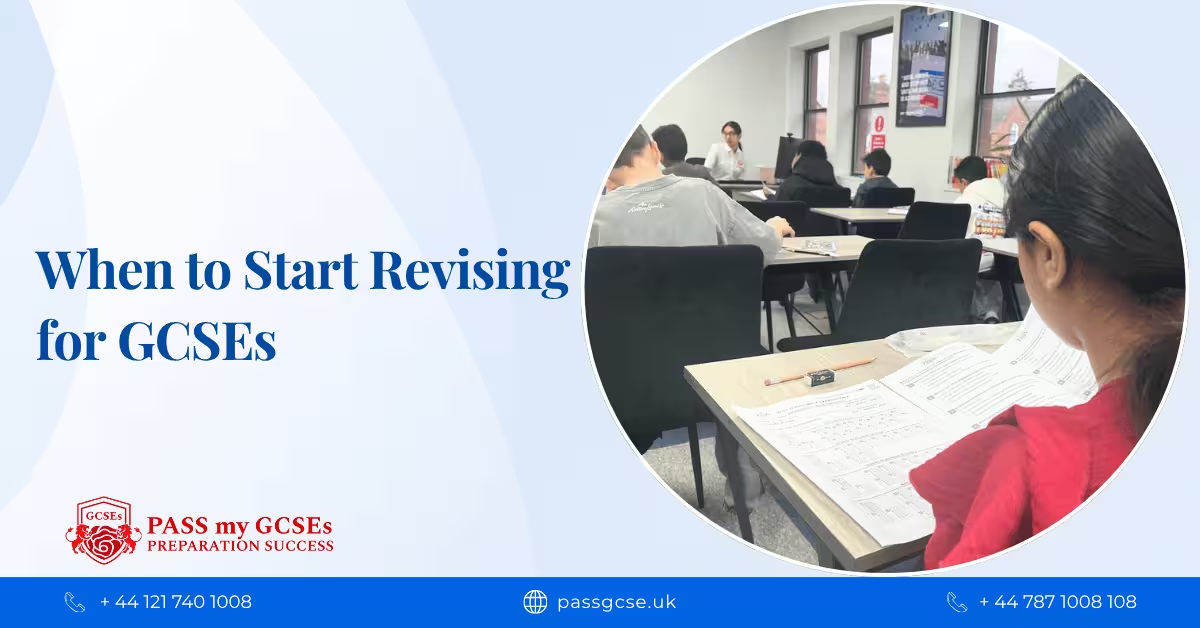
The honest answer is earlier than most students think, but not in the way that causes panic. Formal, focused GCSE revision typically works best when it begins around six months before exams, which for most students sitting exams in May and June means starting in earnest around January of Year 11. However, the groundwork that makes that focused revision actually effective, understanding topics properly and keeping notes organised, should start much earlier than that, ideally from the very first week of Year 10.
Plenty of students look back after results day and wish they had started sooner, not because they lacked ability, but because they spent the final weeks trying to learn content for the first time instead of simply reviewing it. The good news is that avoiding this does not require months of intense revision. It requires knowing what to focus on at each stage of the journey, so nothing gets left until it is too late to fix. This guide breaks that journey down month by month, from the start of Year 10 through to the final exam.
Key Takeaways
Formal, focused revision generally works best starting around six months before exams, but early preparation, understanding topics as they are taught, should begin from the start of Year 10.
Little and often beats cramming. Short, regular sessions build stronger recall than long, infrequent ones, and they are far less stressful to sustain.
Year 10 end of year exams and Year 11 mocks are genuine practice runs for the real thing, and deserve to be taken seriously rather than treated as low stakes.
A knowledge audit, rating each topic by confidence, helps direct revision time towards the areas that will make the biggest difference to a final grade.
There is no such thing as starting too early, but starting late does not mean giving up. Focused, well targeted revision in the final months can still produce real improvement.
Should You Be Revising Before Year 11?
Yes, though not in the way many students assume. Year 10 is not about spending hours revising every evening, it is about building small, consistent habits that mean far less needs to be learned from scratch once Year 11 begins.
GCSE specifications cover a genuinely large volume of content. If a student waits until Year 11 to properly engage with a topic for the first time, they end up trying to learn it and revise it for exams at the same time, often while also sitting mock exams and covering brand new content in class. Starting earlier removes this bottleneck entirely, since topics covered in Year 10 have already been understood once, which means Year 11 becomes about genuine revision rather than first time learning.
Even 20 to 30 minutes of review per subject each week during Year 10 makes a measurable difference by the time exams arrive. Think of it as topping up understanding as the course goes, rather than trying to build it all from nothing in a single revision season.
Year 10: Building the Foundation
September to December: Establish the Habit Early
At the very start of Year 10, the goal is not intensive revision, it is building the habit of reviewing content while it is still fresh. After each lesson, spending just 10 minutes recapping what was covered, checking real understanding, and organising notes properly pays off far more than it seems to at the time.
Spend around 10 minutes after each lesson recapping key points while they are still fresh in memory
Ask questions in class, or speak to a teacher, the moment something feels unclear, rather than letting confusion build up silently
Keep notes organised by topic from the outset, so nothing needs to be untangled later under time pressure
This habit alone dramatically reduces the number of knowledge gaps that accumulate over the course, and gaps prevented early are gaps that never need to be filled under pressure later. If you want a fuller breakdown of how to structure this early stage properly, our guide on how to prepare for GCSEs in Year 10 covers it in more depth.
Around Easter: Treat End of Year Exams as a Genuine Practice Run
Most Year 10 students sit some form of end of year exam, whether the school calls them mocks or simply end of year assessments. Whatever they are labelled, they are a genuine opportunity to experience real exam conditions well before it actually counts.
Build a simple revision timetable in the lead up, even a basic one
Try a few different revision techniques to see what genuinely works, rather than defaulting to whatever feels easiest
Take timing and exam conditions seriously, since this is valuable practice for pacing under pressure
Review results honestly afterwards to see exactly where marks were lost
Active techniques that force genuine recall, testing yourself rather than simply rereading notes, consistently prove more effective here than passive review, and this is the ideal point in the journey to start building that habit properly.
Summer Holidays: Protect Momentum Without Losing the Break
The summer between Year 10 and Year 11 matters more than most students realise, but it should never mean sacrificing the whole break. A small, steady amount of review, even just a few hours spread across the holidays, prevents the kind of content loss that otherwise has to be relearned from scratch in September.
Look back at end of year exam results to identify genuine strengths and weaknesses
Set a small number of realistic goals for the break, rather than an overwhelming list
Focus any revision time specifically on weaker areas, rather than spreading it too thinly
Leave plenty of room for rest, since burning out before Year 11 even begins helps no one
Students who protect a small amount of momentum over the summer consistently find the start of Year 11 noticeably less overwhelming than those who stop completely.
Year 11: Where Revision Gets Serious
September to December: Balance New Content With Ongoing Review
Year 11 typically involves finishing the remaining content on the specification while also beginning to properly revise everything covered so far, which makes the fewer months before Christmas genuinely demanding. Staying organised here matters more than working longer hours.
Continue the 10 minute end of lesson recap habit built in Year 10
Start a proper revision timetable that accounts for upcoming mock exams
Complete a knowledge audit for each subject, listing topics and rating confidence honestly
Begin practising exam style questions on topics already covered, rather than waiting until revision "officially" starts
A knowledge audit is one of the most useful tools at this stage. List the topics and sub-topics for each subject, then rate confidence in each using a simple traffic light system, red for not confident at all, amber for partially confident, and green for genuinely secure. This turns a vague sense of "I should revise everything" into a clear, prioritised plan, with red topics getting the most attention first.
January: Learn Properly From Mock Exam Results
Most students sit their final round of GCSE mock exams in January of Year 11, and the results deserve far more attention than just the grade at the top of the page. Mocks exist to reveal exactly where marks are being lost while there is still real time to act on that information.
Go through each mock paper question by question, not just the overall score
Identify genuine patterns, whether that is a specific topic, a question type, or a recurring exam technique issue
Rebuild the revision timetable around these findings, prioritising the weakest areas first
Ask for help early on anything that still does not make sense after a first attempt at fixing it
This is also an ideal point to bring in extra, targeted support if a particular subject or topic keeps causing trouble. Our GCSE mock exams are designed to closely mirror real exam conditions, so the results genuinely reflect what needs work rather than simply how a student happened to perform on one particular day.
February to April: Build Momentum With Structured, Regular Practice
With mocks behind them and real exams now visibly on the horizon, this is the stretch where consistent, structured practice starts to compound. It is also, for most students, when spaced repetition becomes genuinely important, returning to topics repeatedly over time rather than covering them once and moving on.
Revisit topics on a rolling basis rather than only covering each one once
Work through genuine exam style questions regularly, not just at the end of a topic
Mark all practice honestly against the actual mark scheme, not just a rough sense of whether it "felt right"
Keep the traffic light system updated as red topics move towards amber and green
Working consistently through real GCSE past papers during this stretch is one of the most valuable things a student can do, since nothing builds familiarity with exam wording, timing, and marking quite like genuine past questions marked properly against the official scheme.
Easter Holidays: The Final Serious Push
The Easter break before exams is typically when revision intensity rises properly, though it should still be sustainable rather than relentless. This is the point to refresh the revision timetable entirely around the actual exam timetable, and to make sure the study environment itself is properly set up for focused, distraction free sessions.
Rebuild the revision schedule around the confirmed exam timetable
Set up a proper, distraction free study space
Set small, achievable goals and genuinely acknowledge progress when it happens
Continue regular, timed past paper practice, treating each one as seriously as the real thing
Protect sleep, meals, and breaks, since a tired brain retains far less than a rested one
This is also a sensible point to involve family or friends where it helps, whether that is being tested with flashcards or simply having someone to talk to when motivation dips. For subjects that still feel shaky at this stage, our GCSE revision courses work through content in a properly structured order, which is often exactly what is needed when time feels tight and a clear plan matters more than ever.
Study Leave and Exam Season: Steady, Targeted Effort to the Finish
Once study leave begins and exams are actually underway, the goal shifts to steady, targeted effort rather than trying to learn anything new. There will always be a temptation to panic about topics that feel unfinished, but the most effective use of remaining time is refining what is already understood and shoring up specific weak spots.
Use remaining practice papers to pinpoint exactly where marks are still being lost
Prioritise the highest impact weak areas rather than trying to cover everything equally
Keep using whichever revision techniques have proven to work best throughout the year
Build in proper downtime between exams to reset before the next one
Avoid last minute cramming the night before an exam, since a well rested brain performs better than one that stayed up reviewing everything one final time
If a particular subject or topic is still causing genuine difficulty this close to exams, working with one of our GCSE tutors can help resolve specific sticking points quickly, targeting exactly what is holding a grade back rather than attempting to revise an entire subject from scratch in the time remaining.
Adapting the Timeline to Fit You
This timeline is a genuinely useful framework, but it is not a rigid set of rules that suits every student equally. A few things worth considering when adapting it:
Commitments outside school. Sports, part time work, or caring responsibilities all reduce the hours realistically available each week, which may mean starting focused revision slightly earlier than the general guidance suggests.
Subjects that need more time. If one subject consistently feels weaker than the others, it deserves a larger share of revision time well before the final stretch, not a rushed catch up at the end.
Individual learning style. Some students concentrate best in short, frequent bursts, others prefer longer, focused sessions. Both are valid, they simply require the overall schedule to be built around what actually works.
How you cope under pressure. Students who find exam stress particularly difficult often benefit from starting a little earlier, since it spreads the same amount of content over more time and reduces the pressure of any single session.
The version of this timeline that actually works is the one that is realistic and sustainable for the individual student following it, not the one that looks most impressive on paper.
Common Pitfalls Worth Avoiding
Last minute cramming. Attempting to absorb large amounts of content in the final days before an exam tends to overload rather than help, and rarely produces the results students hope for.
Neglecting a second paper. Some students focus heavily on the first exam paper in a subject and only start revising for paper two once paper one is done, which leaves far too little time.
Letting stress take over. Stress genuinely impairs concentration and recall, which makes an already difficult situation worse. Accepting that not every topic can be covered equally, and prioritising sensibly instead, reduces this pressure considerably.
Skipping the audit stage. Diving straight into revision without first identifying genuine strengths and weaknesses often means time gets spent revising content that was already secure, while weaker topics stay weak.
It Is Never Too Late to Start
If this guide is being read in a slight panic because formal revision has not yet begun, the most important thing to know is that it is genuinely never too late to make meaningful progress. Starting later simply means being more selective and more targeted about where time goes, focusing on the topics and question types most likely to move a grade, rather than attempting to cover absolutely everything in the time remaining.
Whatever stage of the journey you are currently at, structured support can make that time count for considerably more. Our GCSE revision courses provide a clear, properly sequenced path through content for students building up steadily from Year 10, while our GCSE mock exams and past papers give an honest, realistic picture of where marks are currently being lost at any point in the year. And for students who need focused, one to one support on specific subjects or topics, our GCSE tutors help close exactly the gaps that are holding a grade back, whenever in the journey that support is needed.
If you are looking for subject specific guidance to go alongside this timeline, our detailed guides on how to pass GCSE Chemistry, how to pass GCSE Physics, and how to pass GCSE Science are worth reading alongside this one.
Final Thoughts
There is no single perfect moment to start revising for GCSEs, but there is a genuinely sensible pattern that works for most students: build good habits from the very start of Year 10, treat end of year exams and mocks as real practice rather than an afterthought, begin properly focused revision around six months before the real exams, and let mock results guide exactly where that revision time goes. Adjust the timeline to fit your own schedule, learning style, and how you cope under pressure, but whatever stage you are at right now, the best time to bring more structure to your revision is always today, not next week.
Frequently Asked Questions
Should I be revising in Year 10?
Yes, though not in the intensive sense most people imagine. Building small habits from the start of Year 10, reviewing content shortly after it is taught and keeping notes organised, saves considerable formal revision time later and means far less needs to be learned from scratch in Year 11.
Is three months enough time to revise for GCSEs?
Ideally, formal revision would start around six months before exams, but three months can still produce a genuine improvement if used well. The priority becomes identifying strengths and weaknesses quickly and focusing revision time specifically on the areas where the biggest gains are realistically possible.
When should focused GCSE revision actually begin?
As a general guide, around six months before exams tends to be the sweet spot, early enough to properly cover the required content, but late enough to maintain motivation without burning out. For most students sitting exams in May and June, that means around January of Year 11.
What should I do if I have not started revising and exams are close?
Focus on being selective rather than attempting to cover everything. Use past papers and any available mock results to identify exactly where marks are being lost, then prioritise those specific topics and question types, since targeted revision in the time remaining can still make a meaningful difference.
How many hours a week should I be revising in Year 11?
This varies considerably by student and by how many subjects are being juggled, but many students find somewhere around 15 to 20 hours a week realistic during the focused revision period, adjusted around school, rest, and other commitments. Consistency across shorter, regular sessions matters more than any single ideal number of hours.

Mr Singh
Founder, Pass My GCSE
Mr Singh is the founder of Pass My GCSE, with over 30 years of teaching experience. Having overcome academic setbacks himself, he is passionate about ensuring no child struggles alone. His approach focuses on personalised support, strong foundations, and building confidence. He has helped students achieve outstanding results in 11+ and GCSE examinations
Loading related posts…
Ready to Transform Your Child's GCSE Results?
Join hundreds of Birmingham families who trust Pass My GCSE to deliver real, measurable results.