Loading page…
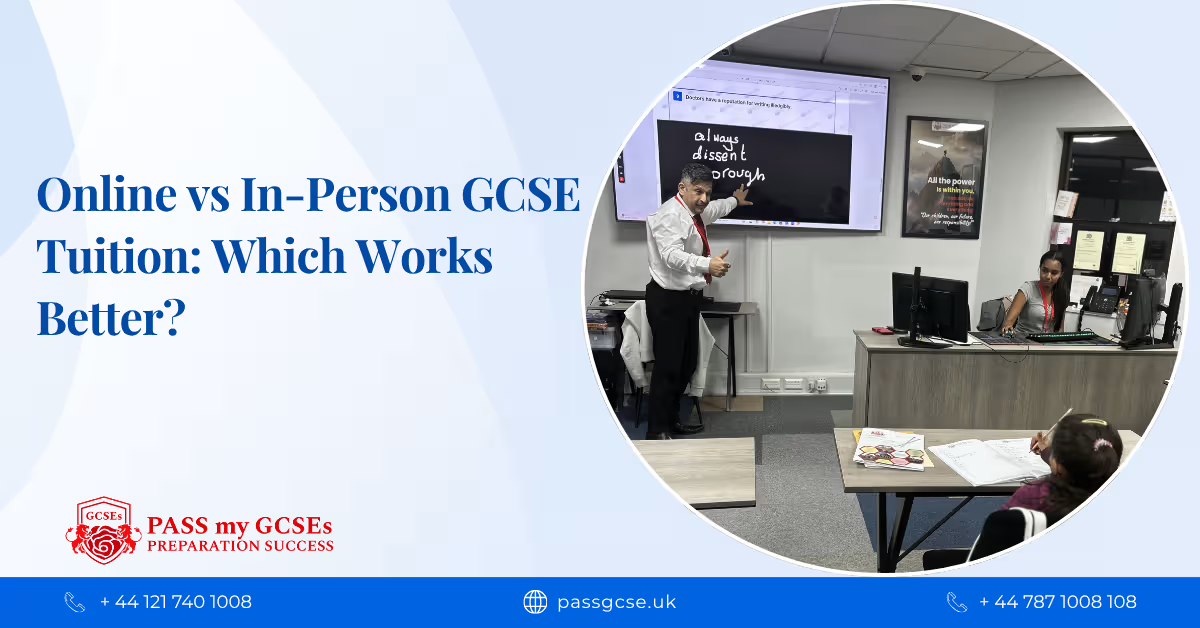
Online vs In-Person GCSE Tuition: Which Works Better?
Published on
It is one of the first questions parents ask when they start looking for a tutor: should lessons happen at a desk in the same room as the tutor, or on a screen at home? Since the pandemic, online tuition has become completely normal, and plenty of families now wonder whether it is just as good, or whether something important gets lost.
The honest answer is that neither format wins automatically. The research points to the quality of the teaching, how well it matches your child's gaps, and how consistently it happens as the big drivers of progress. The format matters mostly in how it fits your child's personality, your schedule, and the subject being taught. This guide sets out what the evidence says, the real pros and cons of each, what they cost, and how to decide which one suits your child.
Key Takeaways
Evidence from the Education Endowment Foundation suggests online and in-person one-to-one tuition can work about equally well when the teaching is good. Quality, matching, and consistency matter more than the medium.
Students often say they prefer in-person lessons, and engagement can be better face to face, so preference and effectiveness are not the same thing.
Online tuition offers more choice of tutors, no travel, and easier scheduling. In-person tuition offers fewer distractions, easier rapport, and natural paper-based exam practice.
Published price guides disagree on whether online is cheaper. Some find it 15% to 25% cheaper, while others find little difference or even a premium, so compare actual quotes.
Many families do best with a hybrid: regular online sessions for convenience, plus in-person sessions for timed papers and mock exams.
Quick Comparison
Online tuition | In-person tuition | |
Effectiveness | Similar when teaching quality is high | Similar when teaching quality is high |
Engagement | Depends on the student; needs a quiet space and self-discipline | Often easier for focus, especially for younger or less confident students |
Convenience | No travel, flexible timing | Travel time, fixed location |
Tutor choice | Wide: any specialist in the country | Limited to who is nearby |
Distractions | Phone, siblings, notifications, home noise | Fewer, in a dedicated learning space |
Exam-style practice | Needs printing and handwriting; timed papers need good setup | Natural: pen, paper, exam conditions |
Cost | Often a little cheaper, not always | Often a little higher once travel is included |
Best for | Busy schedules, rural areas, niche needs | Students who need structure and rapport |
What Does the Evidence Say?
The most useful starting point is the Education Endowment Foundation's review of the research on teaching approaches. It estimates that one to one tuition (opens in a new tab) adds around five months of progress on average, with studies in secondary schools closer to four. The same review notes that studies using digital technology show broadly similar effects, and its work on remote learning concluded that clear explanations, scaffolding, and feedback matter more than how or when lessons are delivered.
Other research points the same way. A randomised trial of an eight-week, fully online maths programme for secondary students in small groups found positive effects on achievement (opens in a new tab), which suggests that online delivery can work when the programme is well designed.
There is a caveat worth knowing. The EEF's evaluation of the National Online Tuition Pilot, which reached 1,425 learners in 65 schools, found that most learners said they would prefer in-person tutoring if given the choice, and Ofsted observed that engagement tended to be better face to face. In other words, online can be just as effective, but it is not always what students enjoy most. A student who is engaged is more likely to attend, concentrate, and keep going for months, which is where results come from.
So the evidence supports a practical conclusion. Do not choose a format because it sounds more modern or more traditional. Choose the tutor and the plan first, then pick the format that your child will actually stick with.
Pros and Cons of Online GCSE Tuition
Advantages of Online GCSE Tuition
No travel. Sessions fit around school, clubs, and family life without a journey on either end.
Wider choice. You can choose a tutor who specialises in your child's exam board and tier, wherever they are based.
Flexible timing. It is easier to find an evening or weekend slot, and easier to reschedule.
Digital tools. Shared whiteboards, screen sharing, and recorded notes can make explanations clear and easy to revisit.
Comfort. Some students feel more relaxed at home, which helps them ask questions they might not ask in person.
Drawbacks of Online GCSE Tuition
Distractions. A phone, notifications, or a noisy house can break concentration quickly.
Technology problems. Poor connections or unfamiliar platforms waste time.
Screen fatigue. After a full school day, another hour on a screen can be draining.
Less natural rapport. Some students find it harder to build trust or admit confusion on video.
Paper practice. Maths working, diagrams, and handwritten essays can be harder to share unless the setup is good.
Pros and Cons of In-Person GCSE Tuition
Advantages of In-Person GCSE Tuition
Focus. A dedicated learning space with a tutor in the room makes it easier to stay on task.
Rapport. A tutor can read body language, spot confusion early, and respond quickly.
Natural exam practice. Pen, paper, and timed conditions mirror the real exam.
Routine. Travelling to a session creates a clear boundary between school, home, and learning.
Drawbacks of In-Person GCSE Tuition
Travel time. The journey adds time and sometimes cost, especially in the evening.
Limited choice. You are restricted to tutors or centres within a reasonable distance.
Less flexibility. Sessions are harder to move at short notice.
What About Cost?
Published price guides do not agree on which format is cheaper, so it is worth treating any single figure with caution. Some guides report that online tuition is around 15% to 25% cheaper because tutors save on travel. Others report only a small difference, and some tutor-listing data shows online rates slightly higher for certain subjects. Typical GCSE rates quoted across recent guides range from roughly £18 to £40 an hour online and £28 to £65 an hour in person, with London at the upper end.
The sensible approach is to compare quotes for the same tutor quality and the same number of sessions. Remember that in-person tuition may add travel costs, and that cheaper is not better if the tutor is not a subject specialist. Our guide on how much a Maths GCSE tutor costs in the UK breaks down what affects the price in more detail.
Which Works Better for Your Child?
If your child... | Consider | Why |
Is easily distracted or struggles to focus | In-person, or online with a very structured setup | A dedicated space and a tutor in the room reduce drift |
Is shy or anxious about asking questions | Whichever feels safest; some prefer online, others in person | Comfort matters more than format; try a trial session |
Is independent and self-motivated | Online works well | They are likely to use the flexibility well |
Has a very busy schedule with clubs or sport | Online | No travel makes weekly sessions realistic |
Lives far from a good local tutor or centre | Online | Access to specialists matters more than proximity |
Needs lots of handwritten, timed paper practice | In-person, or hybrid | Exam-style conditions are easiest to recreate in person |
Is in Year 9 or Year 10 and still building habits | In-person or structured online | Routine helps younger students settle in |
Is close to exams and needs targeted catch-up | Whichever you can start quickest | Speed of start matters most |
A hybrid is often the most practical answer. Weekly online sessions keep things consistent and convenient, while occasional in-person sessions are used for timed papers and mock exams, which are easier to run under real exam conditions.
How to Make Either Format Work
Whichever you choose, a few habits make the difference between sessions that help and sessions that merely happen.
For online sessions
Set up a quiet, tidy space with a decent connection, headphones, and a charged device.
Keep the camera on and the phone out of reach.
Use paper and pen for working, and show it to the tutor on camera when needed.
Print past papers for timed practice rather than working only on screen.
For in-person sessions
Plan the journey so your child arrives calm, not rushed.
Bring recent school work, mock papers, and a list of topics that are causing trouble.
Agree with the tutor how progress will be shared with you.
For both
Start with a trial or assessment session and give it three or four weeks before judging.
Ask for a clear plan linked to your child's exam board and tier. Our guide on how to find your GCSE exam board helps if you are unsure.
Make sure sessions connect to what the school is teaching.
Look for regular, clear progress reports.
Keep sessions regular and short rather than occasional and long.
Use genuine past papers, marked against the real mark scheme. Our guide on how to use GCSE past papers shows how.
If you are still choosing a tutor, our guides to finding the best Maths GCSE tutor near you and the best English GCSE tutor near you list the questions worth asking.
Online or In-Person: Choose What Works for Your Child
At Pass my GCSEs, we do not push one format over the other. We offer in-person tuition at our centre in Edgbaston, Birmingham, and fully live online tuition for students anywhere in the UK, with the same structured, interactive approach in both. Our tutors are AQA, Edexcel, and OCR specialists, and every student receives clear progress reporting so you can see what is improving.
Our GCSE tutors cover Maths, English, Science, and more, and our GCSE tuition near me page explains how local support works. Our GCSE revision courses give students a structured path through the specification, and our GCSE mock exams recreate real exam conditions with detailed examiner-style feedback, which is especially useful for students who do most of their weekly sessions online. For genuine papers to practise with, our GCSE past papers collection is organised by subject and tier, including a dedicated GCSE Maths past papers page.
If you are comparing local providers, our guide to the best GCSE tuition provider in Birmingham explains what to look for, and if time is tight, our GCSE exam dates guide helps you count back from the first paper.
ONLINE AND IN-PERSON GCSE TUITION
Not Sure Which Format Suits Your Child?
Book a free assessment and we will help you choose between live online sessions and in-person tuition at our Edgbaston centre.
Conclusion
Online and in-person GCSE tuition can both work well. The research suggests that good teaching, a clear plan, regular sessions, and close links to the classroom matter far more than the format. What differs is fit: online suits busy schedules, wider tutor choice, and independent students, while in-person suits students who need structure, rapport, and natural exam-style practice. The best choice is the one your child will attend consistently and engage with, so start with a trial, judge it on progress rather than preference, and do not be afraid to mix the two as exams get closer.
Frequently Asked Questions
Is online GCSE tuition as effective as in-person tuition?
Evidence from the Education Endowment Foundation suggests that online and in-person tuition can be similarly effective when the teaching quality, matching to the student's gaps, and consistency are strong. The format matters less than how well the tuition is delivered.
Is online tuition cheaper than in-person?
Often a little, but not always. Some price guides find online around 15% to 25% cheaper because there is no travel, while others find little difference. Compare actual quotes for the same tutor quality, and remember to include travel costs for in-person sessions.
Which is better for a shy or anxious student?
It depends on the student. Some feel more comfortable at home on a call, while others open up more face to face. A trial session in each format is the best way to find out, and a good tutor will adapt to help the student feel at ease.
How do I know if online tuition is working?
Look for the same signs you would expect in person: a clear starting assessment, a plan tied to the exam board, regular progress updates, improving marks on the topics being taught, and growing confidence. Give it three to four weeks before judging, and ask for evidence of progress.
Does Pass my GCSEs offer online or in-person tuition?
We offer both, so you can choose the format that suits your child. You can attend in person at our centre in Edgbaston, Birmingham, or join live online sessions from anywhere in the UK. Online lessons are just as structured and interactive as in-person ones, with the same exam board specialists and the same regular progress updates. Not sure which is best for your child? Book a free assessment and we will help you decide.
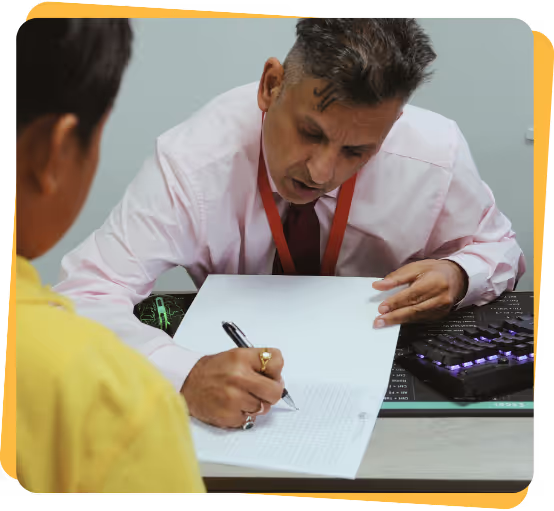
Mr Singh
Founder, Pass My GCSE
Mr Singh is the founder of Pass My GCSE, with over 30 years of teaching experience. Having overcome academic setbacks himself, he is passionate about ensuring no child struggles alone. His approach focuses on personalised support, strong foundations, and building confidence. He has helped students achieve outstanding results in 11+ and GCSE examinations
Loading related posts…
Ready to Transform Your Child's GCSE Results?
Join hundreds of Birmingham families who trust Pass My GCSE to deliver real, measurable results.